Chùa Vàm Ray: A Golden Khmer Temple in the Heart of Tra Vinh
Chùa Vàm Ray, also known as Vam Ray Khmer Temple, is one of the most impressive Khmer Buddhist temples in southern Vietnam. Located in Tra Vinh Province, the temple stands out with its brilliant golden color, detailed decorations, and strong Khmer architectural identity.
More than a beautiful religious building, Vam Ray is a place where Khmer culture, Theravada Buddhism, traditional art, and community life come together. For travelers exploring the Mekong Delta, it offers a deeper look at the cultural diversity that has shaped southern Vietnam for centuries.
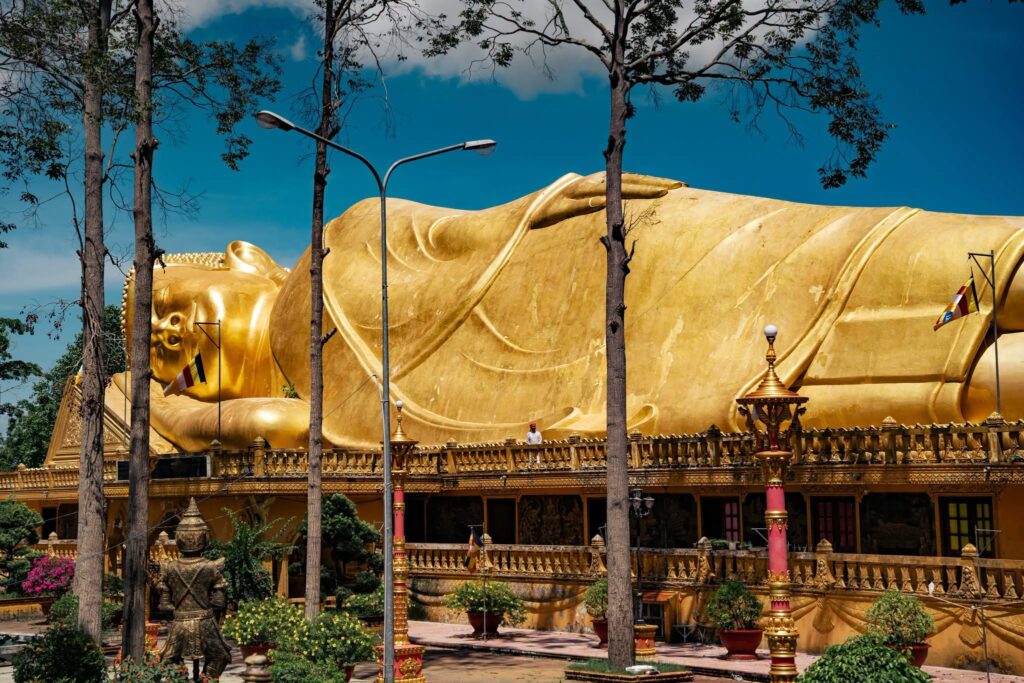
Photo: Nguyen Tran Duy Anh
A Golden Landmark of Tra Vinh
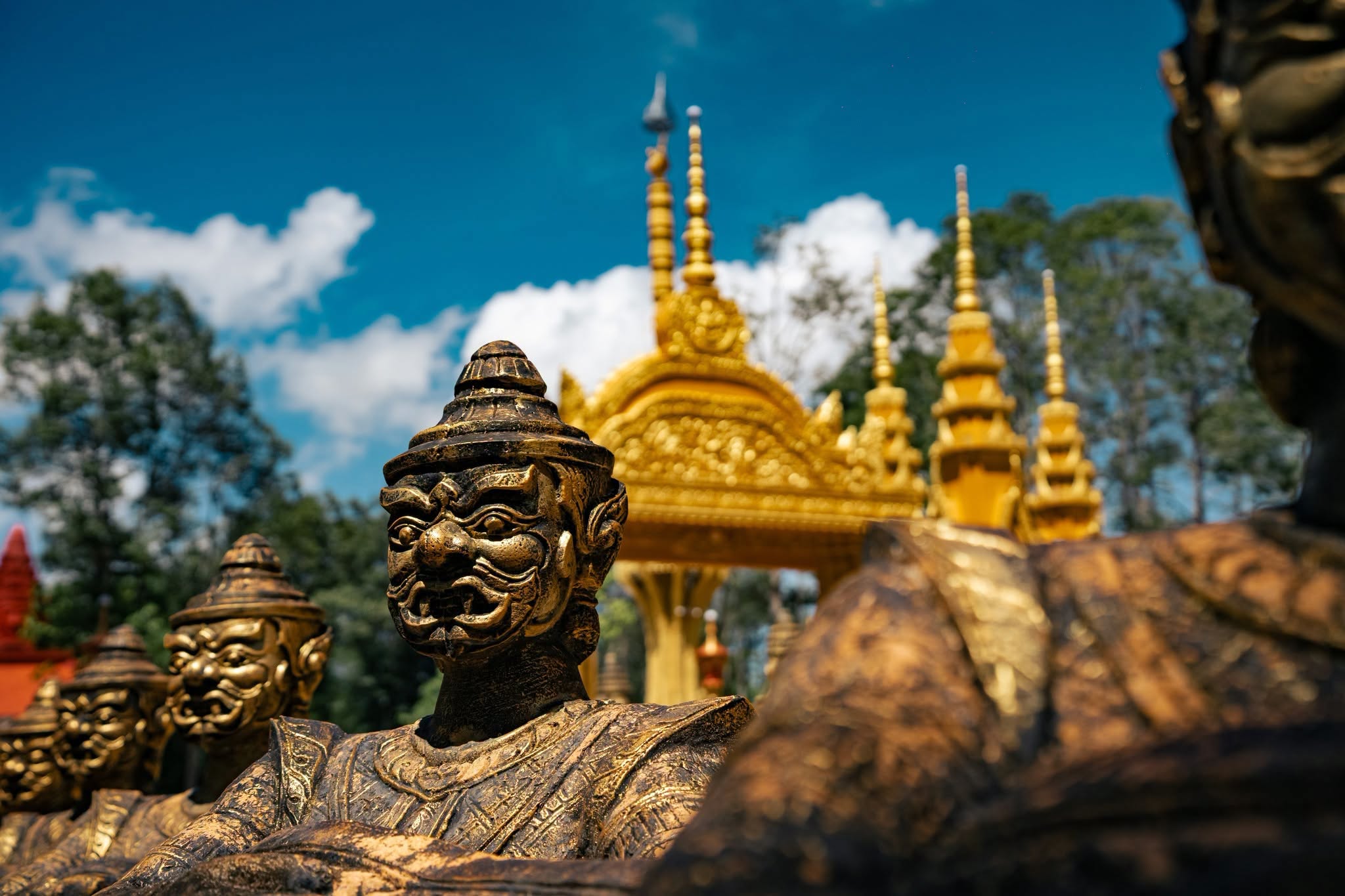
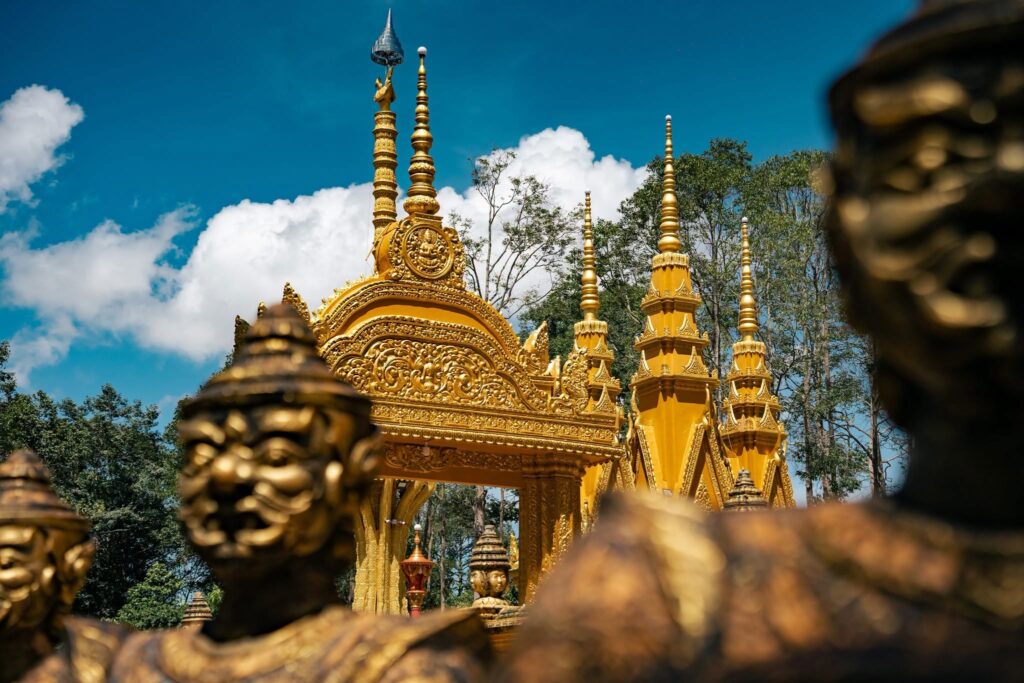
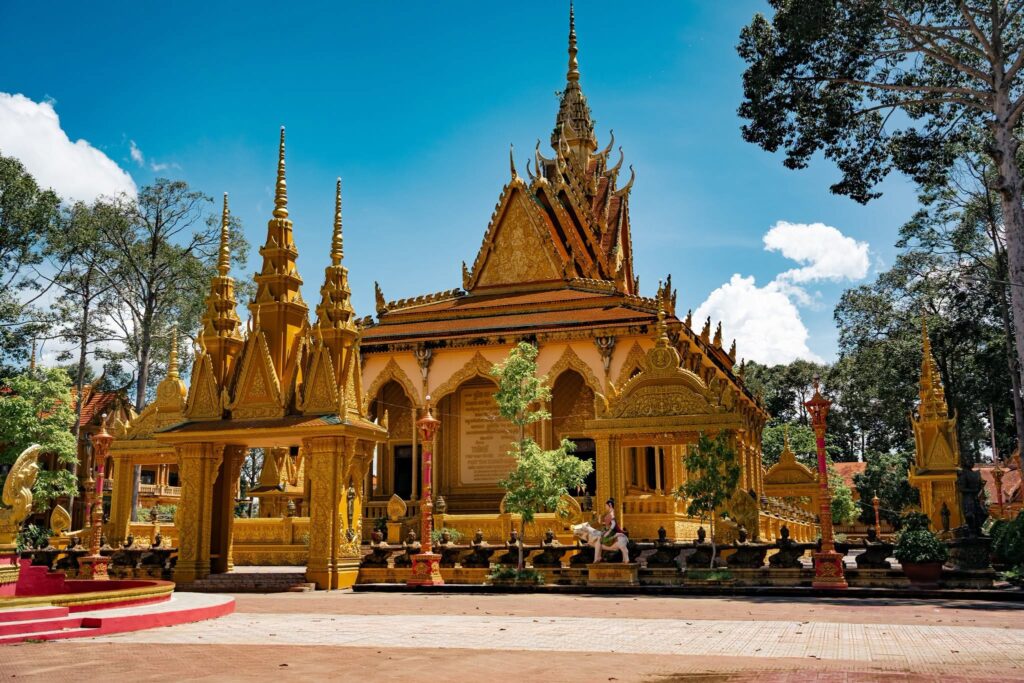
The first impression of Vam Ray Temple is its remarkable golden appearance. From the main gate to the central sanctuary, many architectural details are covered in gold or painted in warm yellow tones. Under the tropical sunlight of Tra Vinh, the temple can appear almost luminous.
Yet the color is not simply decorative. Gold is traditionally associated with sacredness, dignity, purity, and the spiritual world in many Buddhist artistic traditions. At Vam Ray, the extensive use of gold helps create a visual connection between the temple and the religious atmosphere of Khmer Theravada Buddhism.
The result is an architectural landscape that feels very different from the surrounding rural scenery of the Mekong Delta.


A Strong Expression of Khmer Architecture
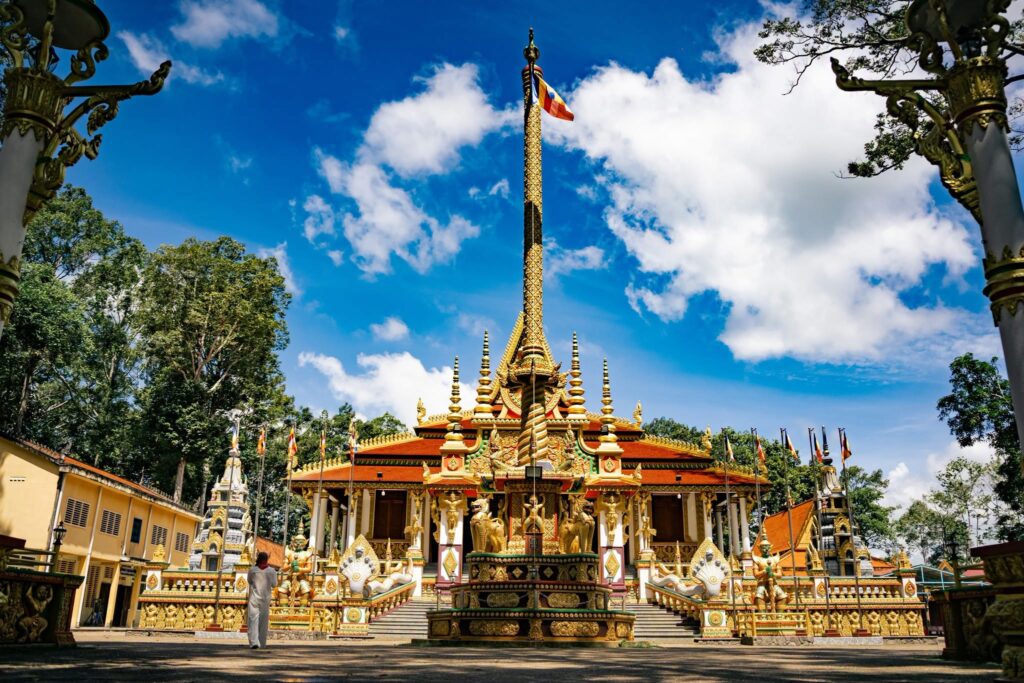
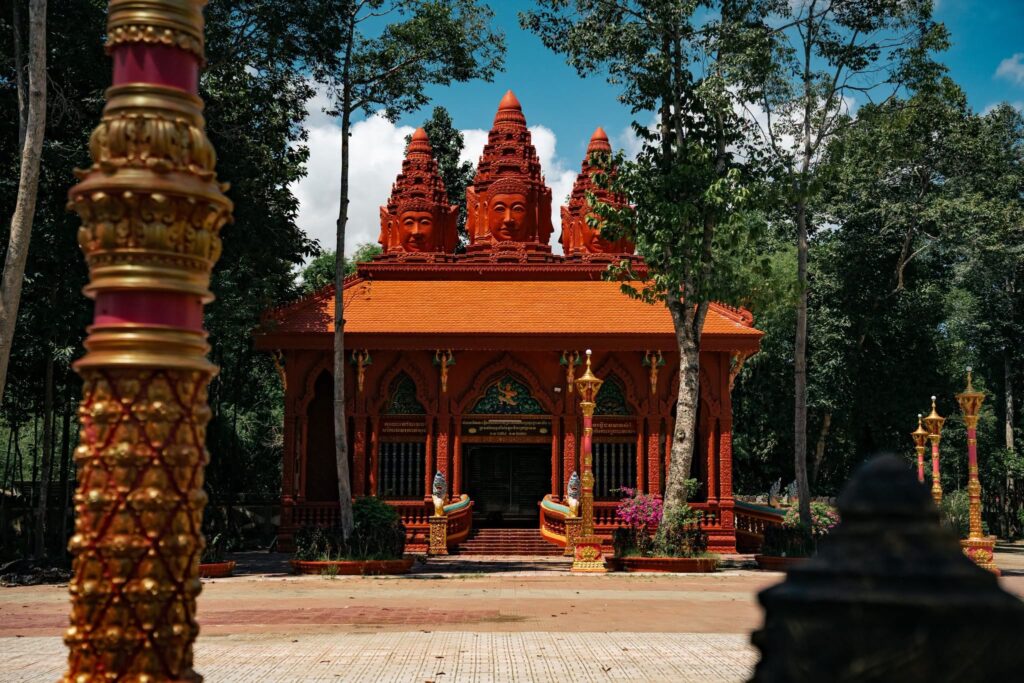
Vam Ray Temple is particularly valuable because its architecture preserves many recognizable elements of Southern Khmer temple design.
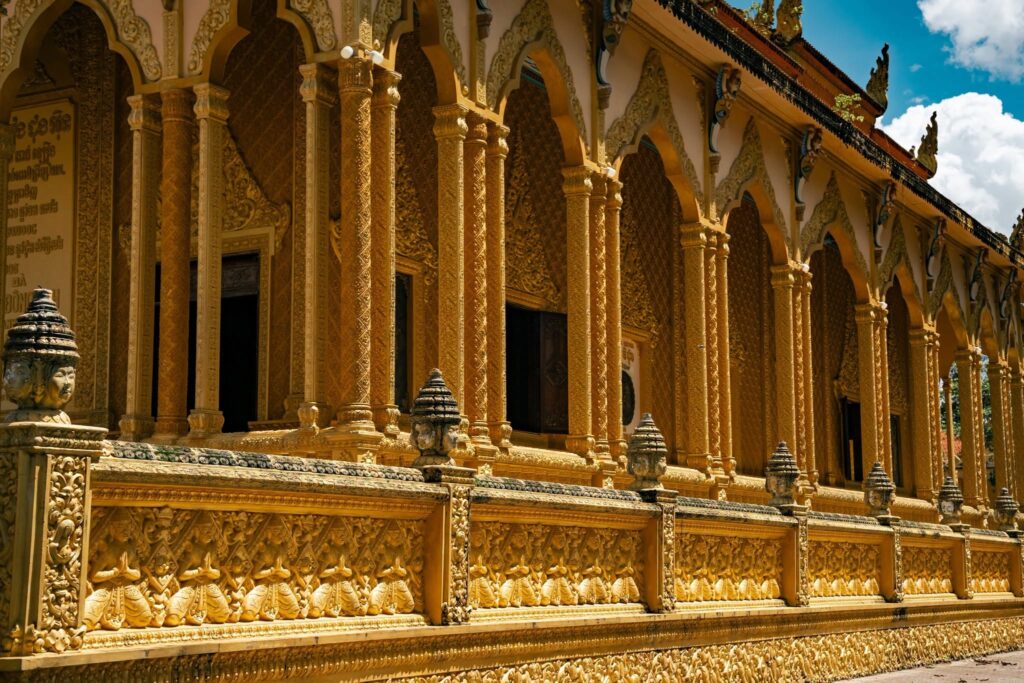
The complex features a monumental entrance, elaborate ornamental patterns, a richly decorated main sanctuary, and numerous sculptures inspired by Khmer Buddhist traditions. Roofs are arranged in multiple layers, while pointed decorative elements rise toward the sky.
Look closely and the temple reveals a remarkable amount of symbolic detail.
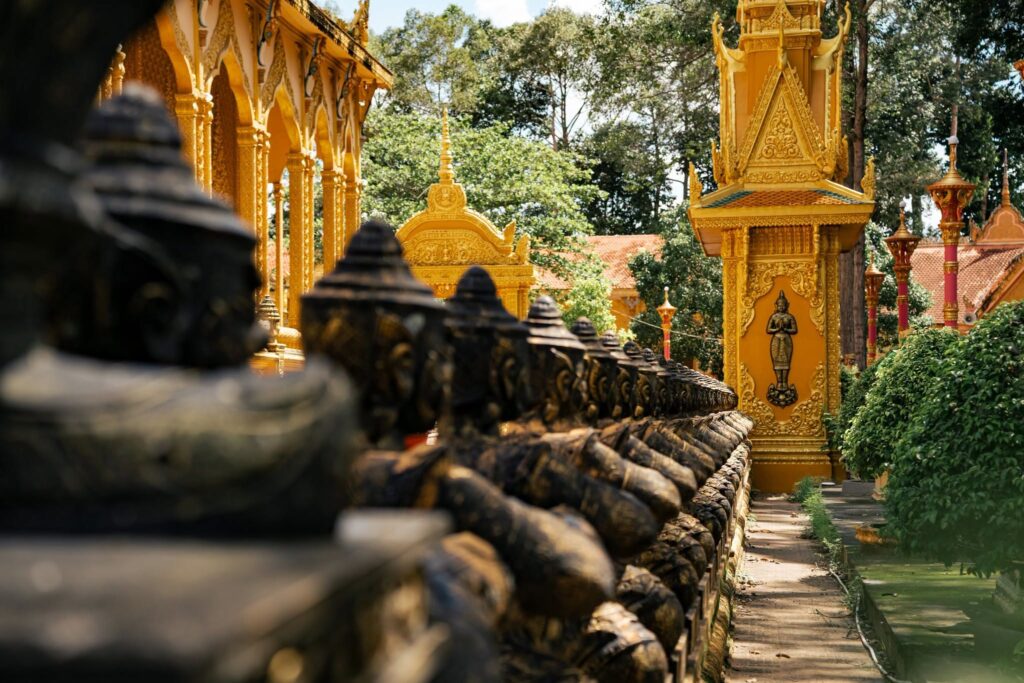
Traditional Khmer motifs appear throughout the complex, including stylized naga serpents, mythical creatures, floral patterns, celestial figures, and other religious decorations. These elements are not merely ornamental. They form part of a visual language that has been developed and passed down through generations of Khmer culture.
The Influence of Theravada Buddhism
One of the most important aspects of Vam Ray is its connection to Theravada Buddhism, the dominant Buddhist tradition among the Khmer community in southern Vietnam.
For Khmer communities in Tra Vinh and other parts of the Mekong Delta, the pagoda is much more than a place for prayer. It can function as a center of education, cultural preservation, community gatherings, religious ceremonies, and traditional celebrations.
This makes Khmer temples fundamentally different from the image of a pagoda as simply a tourist attraction.
At Vam Ray, architecture provides a physical expression of a living cultural system. The temple’s spaces, sculptures, colors, and ceremonies all contribute to a sense of continuity between the present and earlier generations.
The Giant Reclining Buddha
One of the most recognizable features associated with Vam Ray is its large reclining Buddha statue.
The Buddha represents the final stage of the Buddha’s earthly life, traditionally associated with Parinirvana. The reclining posture symbolizes the Buddha entering the ultimate state beyond the cycle of birth and death.
For visitors, the statue is visually striking. For Buddhist communities, however, its meaning is much deeper. It represents a central teaching about impermanence, liberation, and the ultimate goal of Buddhist practice.
This combination of monumental scale and religious symbolism is one reason Vam Ray has become an important cultural landmark in Tra Vinh.
Vam Ray and Khmer Cultural Identity
Tra Vinh is one of the important cultural centers of the Khmer community in the Mekong Delta. Across the province, Khmer pagodas can be found among villages, rice fields, waterways, and agricultural landscapes.
These temples form an important part of the region’s cultural geography.
Vam Ray is particularly prominent because of its scale and visual richness, but its significance should be understood within this wider network of Khmer religious life.
The temple reflects how Khmer communities have maintained their cultural identity through religion, language, architecture, festivals, music, traditional arts, and community institutions.
In this sense, visiting Vam Ray is not only about seeing an impressive building. It is also an opportunity to understand one of the cultural traditions that makes the Mekong Delta so diverse.
A Temple Connected to the Landscape
Another fascinating aspect of Vam Ray is its relationship with the surrounding countryside.
The temple is not isolated from everyday life. Outside the ornate architecture are the familiar landscapes of southern Vietnam: flat agricultural land, tropical vegetation, village roads, and waterways.
This contrast creates much of the temple’s visual character.
The brilliant architecture rises from a relatively quiet rural environment, making Vam Ray feel both monumental and deeply connected to its local setting.
The experience is especially beautiful in the early morning or late afternoon, when natural light emphasizes the temple’s golden surfaces and intricate details.
More Than a Tourist Attraction
It is easy to describe Vam Ray as one of the most beautiful temples in southern Vietnam. But that description only captures part of its importance.
The temple is also a reminder that architecture can preserve history and identity.
For the Khmer community, the pagoda is connected to religious practice and cultural memory. Its decorative vocabulary reflects traditions that developed across the Khmer cultural world, while its continued use demonstrates that these traditions remain part of contemporary life.
Visitors should therefore approach the temple as a living religious and cultural space, rather than simply as a photographic destination.
Visiting Chùa Vàm Ray
Vam Ray Temple is located in Tra Vinh Province in Vietnam’s Mekong Delta, an area known for its Khmer cultural heritage and network of traditional pagodas.
When visiting, travelers should dress respectfully and remember that the temple remains an active religious site. Quiet behavior, appropriate clothing, and respect for worshippers are especially important during ceremonies.
Photography can capture the temple’s spectacular architecture, but taking time to observe the details is even more rewarding. Look at the roof lines, mythical figures, naga motifs, Buddha images, columns, doors, and painted surfaces. Each element contributes to the larger Khmer architectural story.
The Cultural Value of Vam Ray
The real beauty of Chùa Vàm Ray lies in the combination of architecture and living culture.
Its golden towers and elaborate decorations make it visually unforgettable. Its Buddhist symbolism gives the complex spiritual depth. And its connection with the Khmer community gives the temple a cultural meaning that goes beyond aesthetics.
For travelers seeking something deeper than the usual Mekong Delta sightseeing experience, Vam Ray offers a chance to explore the history and identity of southern Vietnam through architecture.
It is a place where golden Khmer architecture, Theravada Buddhism, local community life, and the peaceful landscape of Tra Vinh meet in one remarkable cultural space.
Final Thoughts
Chùa Vàm Ray is more than a golden temple.
It is a powerful expression of Khmer heritage in southern Vietnam, a sacred Buddhist space, and an architectural landmark that helps tell the story of Tra Vinh’s multicultural identity.
Standing beneath its richly decorated roofs, visitors can see how religion and architecture have worked together to preserve cultural traditions across generations.
For anyone traveling through the Mekong Delta, Vam Ray Khmer Temple is a destination worth experiencing slowly—not only with a camera, but also with an appreciation for the culture and history behind its extraordinary beauty.