NINH BINH: THE QUIET MACHINE TURNING LANDSCAPE INTO POWER
Ninh Binh looks peaceful.
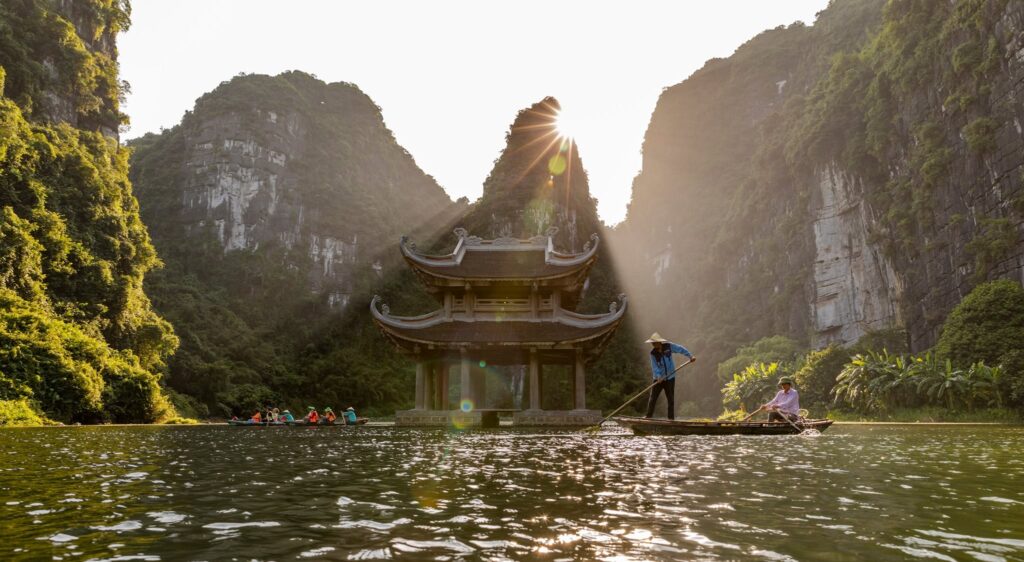
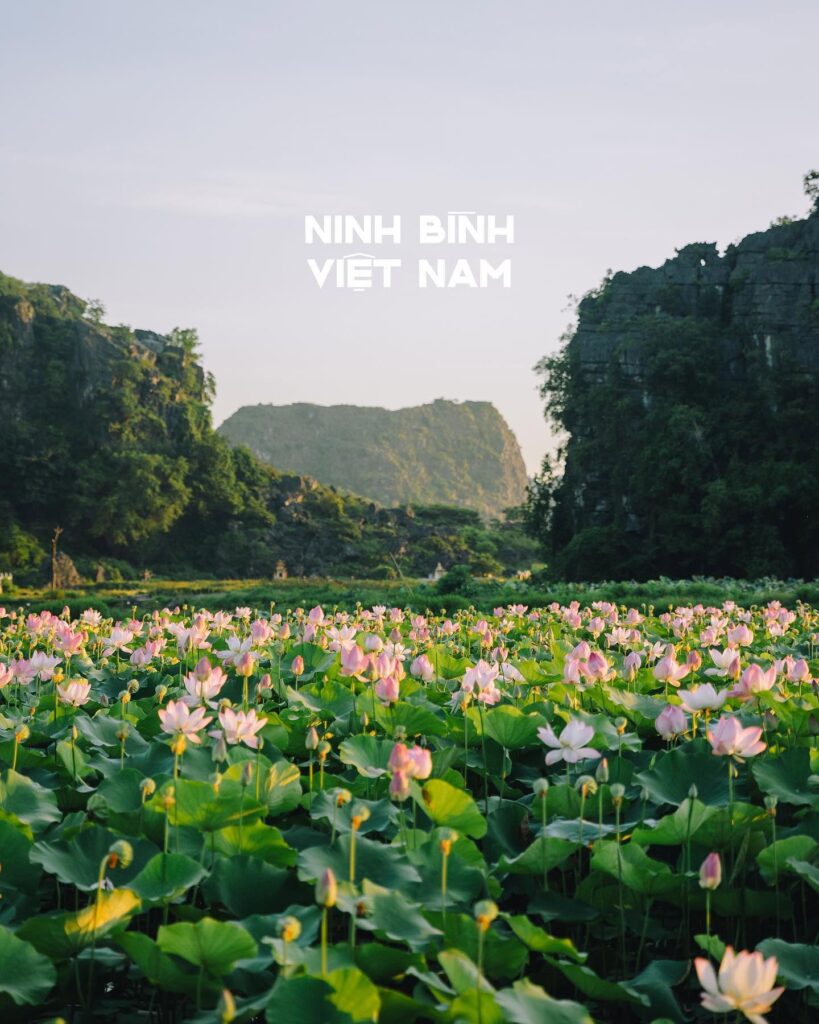
Limestone mountains. Green rice fields. Small boats moving through caves. Old temples. Tourists taking photos.
But if you look deeper, Ninh Binh is not just a beautiful travel destination.
It is an economic machine built around something that cannot easily be copied.
Land.
History.
Water.
Religion.
Memory.
And, most importantly, the story Vietnam tells about itself.
In 2025, Ninh Binh welcomed about 19.4 million tourist visits and generated more than 21,238 billion VND in tourism revenue. That is roughly 21.2 trillion VND. International visitors were more than 2.2 million.
The numbers are big.
But the real story is hidden behind the numbers.
Here are five deeper ways to understand Ninh Binh.
1. CULTURE: NINH BINH IS SELLING MEMORY, NOT JUST SCENERY
Most tourists think they are buying a boat ride.
They are not.
They are buying a feeling of entering an older Vietnam.
That distinction matters.
A mountain can exist in Thailand, China, Indonesia or Europe.
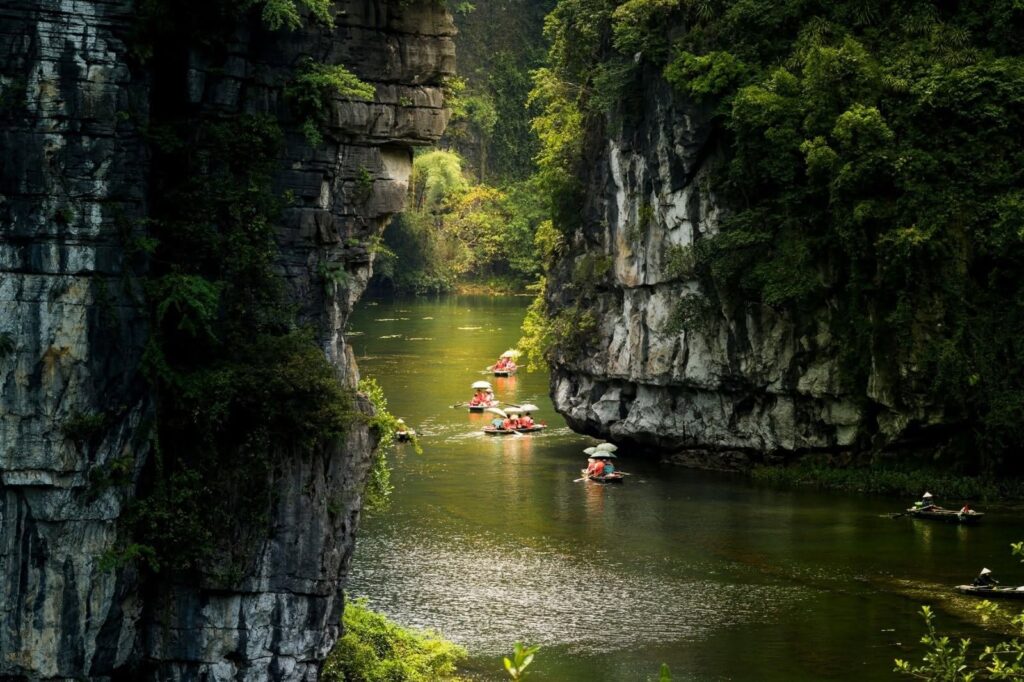
A river can exist almost anywhere.
A cave can exist almost anywhere.
But Ninh Binh combines natural landscape with Vietnamese history, Buddhism, local village life, rice agriculture and the memory of Hoa Lu.
That combination is much harder to copy.
UNESCO describes the Trang An Landscape Complex as a mixed cultural and natural World Heritage property. The core area covers more than 6,200 hectares, surrounded by a buffer zone of about 6,000 hectares. UNESCO also notes evidence of continuous human occupation in the area for more than 30,000 years.
Think about what that means.
A tourist does not simply see rocks.
The tourist sees rocks that have been part of a human landscape for thousands of years.
The tourist does not simply see a river.
The tourist sees a river connected to villages, temples, farming and stories.
The tourist does not simply see Hoa Lu.
The tourist sees a former capital of Vietnam.
That changes the economic value of the landscape.
A normal landscape is scenery.
A cultural landscape is a story.
And stories are much easier to monetize.
This is why Ninh Binh has something many destinations do not have.
It can turn geography into identity.
That is the hidden cultural advantage.
The strongest tourism destinations are not always the places with the most beautiful scenery.
They are the places where visitors can understand a civilization through the scenery.
Ninh Binh is increasingly doing exactly that.
The danger is also obvious.
Once a culture becomes a tourism product, there is a risk that the culture becomes performance instead of living reality.
If every temple becomes a photo background, every village becomes a commercial zone, and every tradition becomes a tourist show, the destination slowly loses the thing that made it valuable.
That is the paradox.
Tourism needs culture.
Too much tourism can destroy culture.
Ninh Binh therefore has a problem richer destinations also face.
How do you make money from heritage without killing the heritage?
That is not a small question.
That is the entire game.
2. ECONOMICS: THE REAL BUSINESS IS NOT THE BOAT TICKET
Here is where people often misunderstand tourism.
They look at the ticket price.
They see a boat.
They calculate the money from the boat.

Wrong.
The boat is only the front door.
The real economic system is much larger.
A visitor creates spending across transportation, accommodation, restaurants, attractions, souvenirs, entertainment and other services.
Ninh Binh’s own 2025 data makes this very clear.
Tourism revenue was estimated at more than 21,238 billion VND.
Restaurants alone generated nearly 10,363 billion VND.
Transportation generated more than 2,632 billion VND.
Accommodation generated more than 1,852 billion VND.
Entrance fees generated nearly 1,371 billion VND.
Goods and souvenirs generated more than 2,258 billion VND.
Other tourism services generated nearly 2,762 billion VND.
Now do a simple calculation.
21,238 billion VND divided by 19.403 million tourist visits gives approximately 1.09 million VND in tourism revenue per visitor visit.
That does not mean every tourist personally spent 1.09 million VND.
It is an average across the tourism economy.
But the number reveals something important.
The destination is no longer only selling attractions.
It is selling an entire economic ecosystem.
And there is an even deeper number.
Ninh Binh recorded more than 4.26 million tourist stays in accommodation establishments in 2025, with more than 4.83 million guest-nights.
That means the economic battle is not simply about getting people to visit.
It is about making them stay.
One tourist who arrives in the morning, takes a boat and leaves is valuable.
One tourist who stays two nights is much more valuable.
Why?
Because the tourist buys breakfast.
Then coffee.
Then transport.
Then dinner.
Then accommodation.
Then another attraction.
Then souvenirs.
Then another meal.
The same human being becomes a much larger economic unit.
This is why extending the average stay is more important than simply chasing bigger visitor numbers.
The game is not always get more people.
Sometimes the better game is make each person worth more to the local economy without exploiting them.
That is a completely different tourism strategy.
3. GEOPOLITICS: NINH BINH SITS INSIDE A MUCH BIGGER VIETNAMESE STRATEGY
Tourism looks soft.
Geopolitics looks hard.
But they are connected.

Ninh Binh sits in the Red River Delta, one of Vietnam’s strategically important regions for economic development, infrastructure, culture, security and national connectivity. Provincial policy documents explicitly describe the region as strategically important in political, economic, cultural, environmental, defense and security terms.
Why does tourism matter in this environment?
Because tourism creates peaceful international contact.
A foreign visitor who spends money in Ninh Binh is not only a customer.
That person becomes a temporary participant in Vietnam’s social environment.
They eat Vietnamese food.
They see Vietnamese religious sites.
They talk to Vietnamese workers.
They photograph Vietnamese villages.
They return home with an image of Vietnam.
That is soft power.
A country does not build international influence only through armies, trade agreements or diplomacy.
It also builds influence through what foreigners experience when they arrive.
Ninh Binh is therefore useful beyond its direct tourism revenue.
It gives Vietnam something strategically valuable.
A controlled window into Vietnamese civilization.
And this becomes more important as international tourism grows.
In 2024, Ninh Binh recorded around 15.293 million tourist visits, including about 1.65 million international visitors. Tourism revenue reached approximately 13,392 billion VND.
Then in 2025, the number rose to about 19.4 million visits and more than 2.2 million international visitors.
That is not a small change.
From 2024 to 2025, total tourist visits increased by roughly 26.7%.
Tourism revenue increased even faster, by about 36.7%.
That difference matters.
If visitors grow 26.7% while revenue grows 36.7%, revenue is growing about 10 percentage points faster than visitor volume.
In simple terms, the destination is becoming more economically productive.
This is what governments want.
Not just more bodies.
More economic value per visitor.
And that is where Ninh Binh becomes a strategic asset.
4. PHILOSOPHY: NINH BINH SHOWS THAT PEOPLE PAY FOR MEANING
There is a deeper philosophical question here.
Why would someone travel thousands of kilometers to sit on a small boat between limestone mountains?
Because human beings do not only consume objects.
They consume meaning.
A phone is an object.
A hotel room is an object.
A meal is an object.
But travel is different.
Travel allows people to temporarily escape their normal identity.
For a few hours, a person from a giant modern city becomes a traveler moving through caves and mountains.
The modern world disappears.
The smartphone remains.
But the psychological environment changes.
This is why ancient landscapes are powerful.
They create distance from modern life.
Ninh Binh does not need to invent a futuristic attraction.
Its advantage is almost the opposite.
It can sell slowness.
Silence.
Water.
Stone.
Old temples.
Rice fields.
Human scale.
That is extremely valuable in a world becoming more urban, more digital and more crowded.
The irony is brutal.
The more modern the world becomes, the more valuable places that feel ancient can become.
This creates a strange economic equation.
Modernization increases the value of escape from modernization.
Ninh Binh benefits from that contradiction.
And this is one reason the destination can become stronger over time if the landscape remains authentic.
But there is another philosophical danger.
If everything becomes optimized for tourists, the destination eventually becomes artificial.
The tourist arrives looking for authenticity.
The local economy starts manufacturing authenticity.
Then the tourist eventually notices.
That is the trap.
A place cannot fake authenticity forever.
The strongest tourism economies are therefore not the ones that build the most attractions.
They are the ones that protect the original thing people came to see.
5. THE HIDDEN FUTURE: NINH BINH’S REAL COMPETITION IS NOT HALONG BAY OR HANOI
People usually compare destinations geographically.
Hanoi versus Ninh Binh.
Ninh Binh versus Ha Long Bay.
Vietnam versus Thailand.
That is too simple.
Ninh Binh is actually competing for something more important.
Time.
A tourist has limited days.
If someone has five days in northern Vietnam, every additional night in one destination means one less night somewhere else.
So the real competition is not only location.
It is how strongly a destination can justify one more night.
This is why the development of accommodation, food, culture, nature, cycling, village experiences, wellness, religious tourism and night activities matters.
Ninh Binh already has a large tourism infrastructure.
By the end of the 2020-2025 period, the province reported more than 900 accommodation establishments with over 12,000 rooms, including 21 four- and five-star establishments or equivalent.
That infrastructure creates a second-order effect.
Hotels create jobs.
Restaurants create jobs.
Drivers create jobs.
Boat operators create jobs.
Farmers can sell products.
Craft producers can sell goods.
Tour guides can earn income.
Local transportation expands.
Property becomes more valuable.
But there is a darker side.
Tourism can create unequal wealth.
The person owning the hotel may become much richer.
The worker serving breakfast may remain on a modest salary.
The landowner may benefit from rising property prices.
The farmer may face pressure to sell land.
The tourist sees paradise.
The local population sees an economy undergoing transformation.
This is why tourism development must be judged not only by visitor numbers.
A better question is:
Who captures the money?
That is the political economy of tourism.
If 21 trillion VND enters the tourism ecosystem but most of the value leaves the local community, then high visitor numbers can create the illusion of prosperity without equally distributing the benefits.
But if more of the value stays with local households, workers, farmers, guides, small businesses and cultural producers, tourism becomes much more powerful.
That is the difference between a tourist destination and a local economic system.
Ninh Binh is moving toward the second model, but the pressure will increase as visitor numbers rise.
And the numbers show why.
In 2025, Ninh Binh received about 19.4 million tourist visits.
Imagine that number becoming 25 million.
Then 30 million.
The question is no longer whether Ninh Binh can attract tourists.
Clearly, it can.
The question becomes whether Ninh Binh can absorb them without destroying the landscape that attracts them.
That is the final battle.
Not marketing.
Not advertising.
Not social media.
Capacity.
THE REAL LESSON OF NINH BINH
Ninh Binh is a powerful example of a simple economic truth.
The most valuable tourism asset may be something you cannot manufacture.
A skyscraper can be built.
A hotel can be built.
A restaurant can be built.
A shopping mall can be built.
But a 30,000-year human landscape cannot simply be built from scratch.
Trang An is valuable because geology, history and human civilization have been accumulating there for thousands of years. UNESCO recognizes its global natural and cultural significance.
That makes Ninh Binh’s strategy very different from ordinary tourism development.
The province does not need to become louder.
It needs to become smarter.
More visitors are good.
Higher spending is good.
International recognition is good.
But preservation is the foundation.
Because once the landscape is damaged, the economic machine eventually eats itself.
The tourists came because Ninh Binh was different.
If Ninh Binh becomes too commercial, too crowded and too artificial, it loses the difference.
And once the difference disappears, the competitive advantage disappears with it.
That is the mafia lesson of Ninh Binh.
The money is not in the mountain.
The money is in the meaning attached to the mountain.
The power is not in the boat.
The power is in the story the boat carries.
The real asset is not the tourist.
The real asset is the place that makes the tourist want to come.
Protect the asset, and the money keeps coming.
Destroy the asset, and no marketing campaign can save it.
Ninh Binh is therefore not simply selling travel.
It is turning geography, history, culture and national identity into economic value.
And right now, the machine is getting bigger.
The question is whether it can get bigger without losing the soul that made people come in the first place.