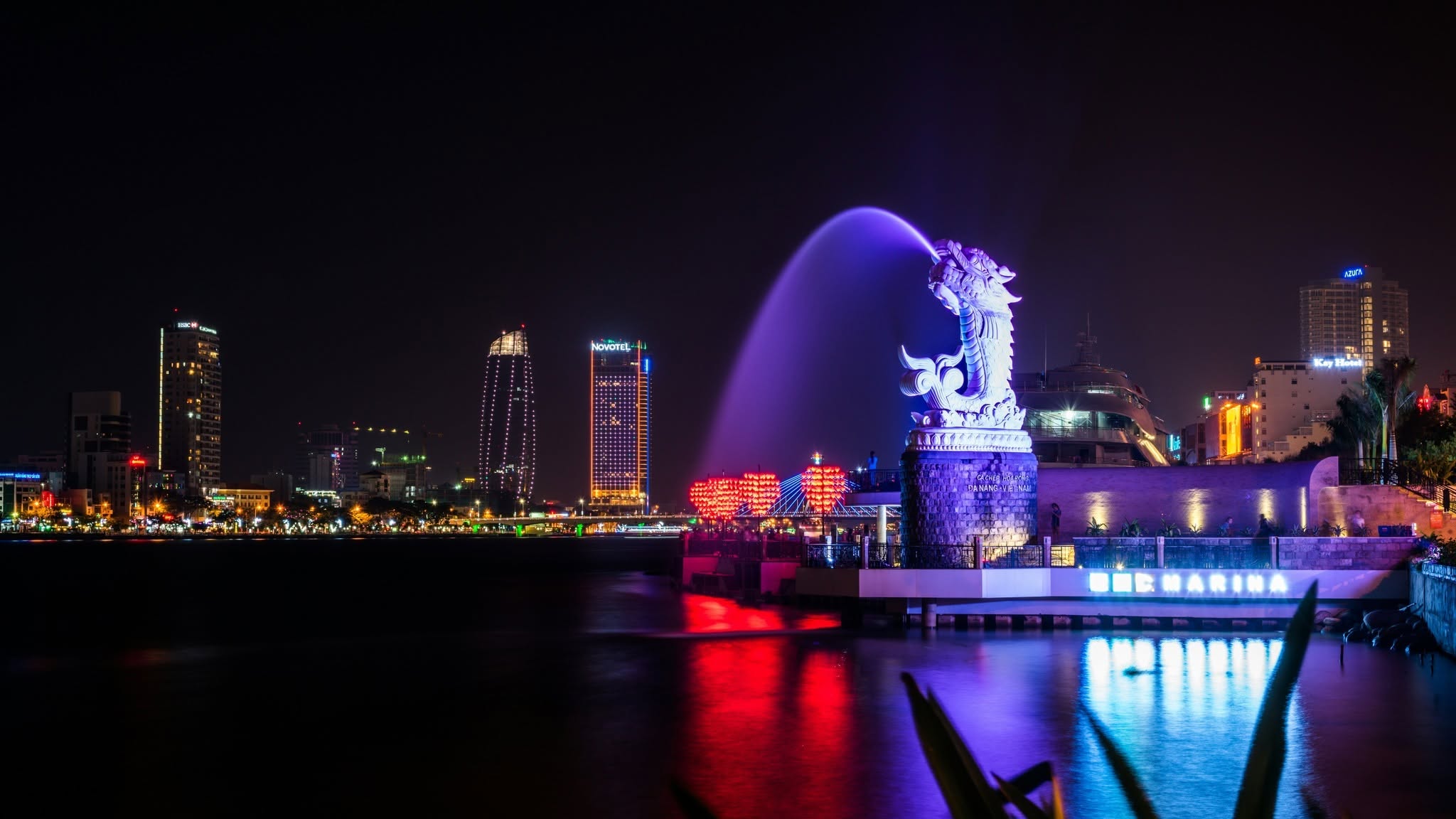
Da Nang is not Asia’s largest financial center, and it does not try to compete with Singapore, Tokyo or Seoul on economic scale.
Its advantage is different.
Da Nang combines a modern urban environment, a major international airport, long beaches, a growing expatriate community and relatively low living costs. For foreigners earning income from overseas, the city can offer exceptional purchasing power.
In 2026, a single person can realistically maintain a comfortable lifestyle in Da Nang for around $700–$1,200 per month. A more premium lifestyle can easily fit within $1,500–$2,000 per month, depending on housing and personal spending habits.
The important point is not simply that Da Nang costs less.
It is that your income can buy considerably more lifestyle here.
How Much Does It Cost to Live in Da Nang?
A realistic monthly budget for one person in 2026 looks roughly like this:
| Expense | Moderate Budget | Comfortable Lifestyle |
|---|---|---|
| Rent | $200–$350 | $350–$550 |
| Food | $150–$250 | $250–$400 |
| Transportation | $30–$70 | $50–$120 |
| Utilities + Internet | $40–$70 | $60–$100 |
| Entertainment | $50–$120 | $120–$250 |
| Shopping & Other | $50–$100 | $100–$200 |
| Total | $520–$960 | $930–$1,620 |
For a foreigner who wants a good apartment, regularly eats at restaurants, uses ride-hailing services and enjoys a normal social life, $700–$1,200 per month is a reasonable target.
Someone looking for premium accommodation, imported products, international restaurants and more frequent travel can obviously spend considerably more.
Rent in Da Nang
Housing is one of Da Nang’s strongest advantages.
A decent one-bedroom apartment can often be found for around $200–$350 per month, depending on location and building quality.
A modern apartment in a popular area can cost around $350–$550.
Higher-end properties with ocean views, swimming pools, gyms and premium facilities can exceed $600–$1,000 per month.
The most popular areas among foreigners include My Khe Beach, An Thuong and Son Tra.
Living close to the beach generally commands a premium, but even premium Da Nang apartments can remain considerably more accessible than comparable accommodation in Singapore, Hong Kong, Seoul or Tokyo.
Food Costs
Food is another major advantage.
Vietnamese food remains highly affordable by international standards.
A local meal can often cost around $1.50–$3.
A good casual restaurant might cost $3–$7.
A higher-end restaurant can cost $10–$20 or more per person.
Coffee is also an important part of the city’s lifestyle. Da Nang has an enormous number of cafés, ranging from simple local coffee shops to modern specialty coffee establishments.
Someone who mainly eats Vietnamese food can keep monthly food expenses relatively modest.
Foreigners who regularly choose Western restaurants, imported products and premium dining should expect a significantly higher budget.
Transportation
Da Nang is relatively easy to navigate.
You do not need a car to live comfortably in the city.
Motorbikes, Grab and taxis are widely available, while many residential areas are convenient for walking.
A person who mainly uses a motorbike, walking and occasional ride-hailing could spend around $30–$70 per month on transportation.
Someone who relies heavily on Grab could spend closer to $100 or more.
The absence of a strong need for car ownership can make a significant difference to a monthly budget.
What Does $1,000 a Month Buy You?
This is where Da Nang becomes particularly interesting.
A possible monthly budget could look like this:
Rent: $350
Food: $250
Transportation: $70
Utilities + Internet: $70
Entertainment: $100
Shopping and other expenses: $100
Total: approximately $940.
That could provide a decent apartment, regular restaurant meals, coffee, transportation and a reasonable social life.
It is not a luxury lifestyle.
But it is a comfortable lifestyle in a major Vietnamese coastal city.
What Does $2,000 a Month Buy You?
At $2,000 per month, the equation changes significantly.
You can consider:
- A premium apartment
- Regular international restaurants
- Frequent Grab rides
- Gym memberships
- Beach activities
- Nightlife
- Weekend trips
- Domestic travel
- Better shopping
- More frequent entertainment
- Significant savings
You could spend $1,200–$1,500 and retain a meaningful portion of your income.
This is one of the reasons Da Nang attracts people earning salaries or business income from outside Vietnam.
Da Nang vs Ho Chi Minh City
Ho Chi Minh City is a completely different environment.
It is Vietnam’s largest commercial center and offers substantially more corporate opportunities, international businesses and professional networks.
It also has a much larger population and more intense urban activity.
Da Nang is smaller and more relaxed.
For someone dependent on the local employment market, Ho Chi Minh City may offer better career opportunities.
For someone earning remotely or operating an international business, Da Nang’s combination of lifestyle and living costs becomes much more attractive.
Da Nang vs Hanoi
Hanoi is Vietnam’s political and administrative center and has a large traditional economy.
It also offers a deeper pool of government, corporate and institutional opportunities.
Da Nang’s advantage is lifestyle.
The beach is integrated directly into the urban environment, and many residential areas are only minutes from the coastline.
For someone working remotely, that difference can be more important than having another office tower nearby.
Da Nang vs Bangkok
Bangkok is a much larger international metropolis.
It offers more shopping, nightlife, international businesses, hospitals and entertainment.
But it also comes with greater urban intensity.
A comfortable single-person lifestyle in Bangkok might require around $900–$1,500 per month, while Da Nang can often provide a comparable lifestyle for around $700–$1,200.
Bangkok is better for someone who wants a massive metropolitan environment.
Da Nang is better for someone who wants a coastal lifestyle with strong purchasing power.
Da Nang vs Kuala Lumpur
Kuala Lumpur is another strong competitor for foreigners looking for value in Asia.
The Malaysian capital offers excellent modern infrastructure, large shopping centers, international restaurants and a sophisticated business environment.
Da Nang offers something different.
It combines a relatively developed urban environment with direct access to beaches and a more relaxed pace of life.
For someone earning $2,000 remotely, both cities can provide a strong standard of living.
The choice comes down to lifestyle rather than simply price.
The Real Advantage: Purchasing Power
This is the most important part of the Da Nang story.
Imagine earning $2,000 per month from an overseas job.
In Singapore, that income would face significant housing pressure.
In Hong Kong, housing could consume a huge portion of the budget.
In Seoul, you would need to manage accommodation carefully.
In Tokyo, you could live reasonably well but would still need to budget.
In Bangkok or Kuala Lumpur, you could live comfortably.
In Da Nang, the same income can potentially provide a very high standard of living while still allowing substantial savings.
This is why looking only at the absolute cost of living can be misleading.
The more useful metric is purchasing power relative to income.
Da Nang’s Growing Expat Appeal
Da Nang has developed into an increasingly recognizable destination for international residents.
The city offers:
- International airport access
- Long beaches
- Modern apartment developments
- Growing café culture
- International restaurants
- Reliable telecommunications
- Hospitals and private medical services
- Large supermarkets
- A growing foreign community
- Easy access to Hoi An and central Vietnam
It is not a replacement for Singapore or Tokyo.
It does not need to be.
Its appeal comes from providing many of the conveniences foreigners want without requiring the same level of income.
But Da Nang Has Limitations
Let’s be realistic.
Da Nang does not have the same economic depth as Ho Chi Minh City.
The professional job market is smaller.
Salaries for locally employed foreigners can also be less competitive than those available in Vietnam’s largest economic centers.
Public transportation is nowhere near the level of Tokyo or Seoul.
The healthcare ecosystem is improving, but it cannot compete with the depth and specialization available in the largest Asian medical hubs.
And if you want endless nightlife, major international events and a huge corporate ecosystem, Da Nang can eventually feel too small.
These are the trade-offs.
The city offers lifestyle and purchasing power rather than maximum career density.
Who Is Da Nang Best For?
Da Nang is particularly attractive to people who already have a reliable source of income.
That includes:
- Remote workers
- Online business owners
- Freelancers
- Entrepreneurs
- Investors
- Content creators
- Digital professionals
- International employees
- Retirees with appropriate residency arrangements
It is less compelling for someone whose primary objective is maximizing local salary.
If your career depends on the local corporate market, Ho Chi Minh City or Hanoi may offer more opportunities.
If your income comes from international sources, however, Da Nang becomes a very different proposition.
How Much Do You Need to Live in Da Nang?
A simple way to look at Da Nang in 2026:
$500/month: Possible, but requires significant spending discipline.
$700/month: Reasonably comfortable with careful housing and lifestyle choices.
$1,000/month: Comfortable for a single person.
$1,500/month: Very comfortable.
$2,000/month: High-quality international lifestyle with significant flexibility.
$3,000+/month: Premium lifestyle with substantial room for savings.
The Bottom Line
Da Nang is not attractive because it has the lowest possible prices.
Its real advantage is the relationship between living costs and lifestyle quality.
You can live near the beach, rent a modern apartment, eat well, drink excellent coffee, use affordable transportation and enjoy a relaxed urban lifestyle without requiring the income normally associated with major Asian capitals.
For someone earning locally, Da Nang’s smaller job market can be a disadvantage.
For someone earning internationally, the equation changes completely.
$1,000 a month can provide a comfortable lifestyle.
$2,000 a month can provide a very high standard of living.
$3,000+ a month can put you firmly into the premium lifestyle category.
That is why Da Nang deserves serious attention in 2026 as one of Asia’s best-value cities for foreigners.