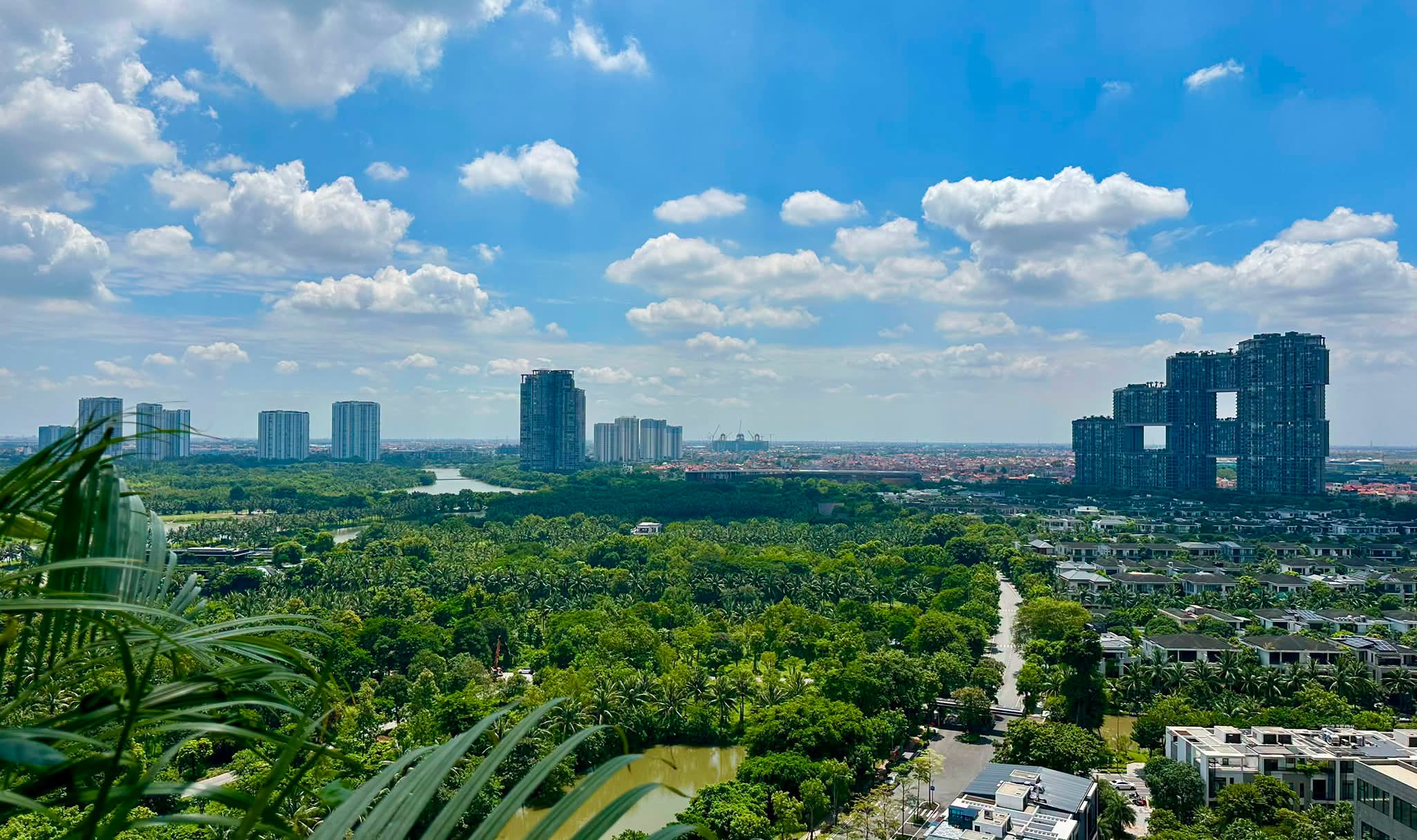
What if you could live close to Hanoi without living in the middle of Hanoi?
Just outside the capital, in Van Giang, Hung Yen, Ecopark offers a very different version of urban life.
There are trees instead of endless concrete.
Lakes instead of traffic.
Parks instead of crowded pavements.
And mornings that can feel surprisingly quiet for a place within easy reach of Hanoi.
This is Ecopark Vietnam, one of the country’s best-known green residential communities and an increasingly interesting option for Vietnamese families, professionals and people looking for a slower pace of life near Hanoi.
What Is Ecopark?
Ecopark is a large-scale planned residential community in Van Giang District, Hung Yen Province, southeast of Hanoi.
The development covers roughly 500 hectares, with more than 20% of the planned area allocated to green space and water. The community includes apartments, villas, parks, schools, sports facilities, restaurants and other services.
The project welcomed its first residents in 2012 and has developed into a substantial residential community rather than simply another apartment development.
The idea is relatively simple:
Build a city where nature is part of everyday life.
And that changes how the place feels.
Why Are People Moving to Ecopark?
Hanoi is exciting.
It is also noisy, crowded and increasingly dense.
For many people, the dream isn’t necessarily to leave Hanoi completely.
It’s to get enough distance from the chaos to breathe.
That is where Ecopark becomes interesting.
You can still work in Hanoi, visit the city, meet friends and enjoy everything the capital offers.
But when you return home, the environment feels significantly more residential and green.
Recent local reporting and resident-focused coverage describe Ecopark as a place increasingly associated with green living, mature trees, parks, cycling and walking spaces, families and a slower daily rhythm.
A City Built Around Green Space
The defining characteristic of Ecopark is obvious almost immediately.
Green space.
The official master plan highlights four large parks, millions of trees and substantial water and landscaped areas.
That matters because greenery isn’t something you have to drive somewhere to find.
It’s part of the neighborhood.
You can walk.
You can cycle.
You can sit beside the water.
You can take children outside.
You can exercise without immediately becoming part of Hanoi’s traffic ecosystem.
Human beings apparently function better when they’re occasionally allowed to see a tree.
Slow Living Near Hanoi
The phrase “slow living” gets abused by lifestyle marketing almost as badly as the word “luxury”.
But Ecopark actually has some of the characteristics people mean when they use it.
Life here can be less rushed.
You have parks and open spaces.
There are cafés and restaurants within the community.
Families have access to schools and children’s activities.
Residents can exercise, walk and cycle without leaving the development.
And because the community is planned, many everyday services are relatively close together.
The result is a lifestyle that feels more like a suburban or resort-style community than central Hanoi.
Ecopark for Expats
For expats considering where to live near Hanoi, Ecopark is an interesting alternative to the more familiar neighborhoods of Tay Ho, Ba Dinh and the Old Quarter.
It is particularly attractive if you value:
- Green space
- Quiet surroundings
- Family life
- Modern apartments
- Schools
- Sports facilities
- Outdoor activities
- A planned residential environment
- More space than central Hanoi
It may be less attractive if your lifestyle depends on being in the centre of Hanoi every night.
That trade-off matters.
Ecopark vs Hanoi
The difference is easy to understand.
Central Hanoi
You get:
- Historic streets
- Restaurants
- Nightlife
- Cafés
- Business districts
- Cultural attractions
- Constant activity
But you also get:
- Traffic
- Noise
- Crowds
- Pollution
- Less private outdoor space
- More densely packed housing
Ecopark
You get:
- Parks
- Lakes
- Trees
- Modern housing
- Family-oriented facilities
- Walking and cycling
- A quieter environment
- A slower daily rhythm
But you give up some of the convenience of being in central Hanoi.
There is no magic neighborhood where everything is perfect.
Humans built cities specifically so they could complain about them from different locations.
Is Ecopark Good for Families?
This may be one of Ecopark’s strongest advantages.
The community has developed around a family-oriented lifestyle, with schools, playgrounds, parks, sports facilities and other amenities.
The official Ecopark information highlights education, healthcare, sports, entertainment and green parks as part of the wider community infrastructure.
For parents, having outdoor space close to home can make a significant difference.
Children don’t necessarily need a carefully scheduled weekend trip to experience nature.
They can simply go outside.
Schools and Education
Education is another important part of the Ecopark ecosystem.
The wider development includes schools and educational facilities serving different age groups.
For families relocating to Vietnam, this can make Ecopark more practical than a purely residential suburb with limited services.
However, parents should still research individual schools carefully, particularly around curriculum, language, fees, admissions and transport.
“International” is one of those words that property brochures enjoy using with extraordinary enthusiasm.
Check what it actually means.
Parks, Lakes and Outdoor Life
One of the most attractive aspects of Ecopark is that outdoor life is built into the environment.
There are landscaped parks, lakes and walking areas throughout the development.
The official master plan states that green space and water account for more than 20% of the approximately 500-hectare development.
That creates a very different experience from living in a typical dense urban neighborhood.
You can go for a morning walk.
Cycle around the community.
Take children to a park.
Meet friends outside.
Or simply sit somewhere green and do nothing.
The last activity is strangely difficult for modern humans to schedule.
Where to Live in Ecopark
Ecopark isn’t one single type of neighborhood.
There are apartments, villas, townhouses and different residential communities developed over time.
Some areas are more urban and apartment-focused.
Others are designed around parks, lakes or lower-density housing.
There are also premium developments aimed at the higher end of the market.
This means the experience of living in Ecopark can vary considerably depending on where you live.
Before renting or buying, spend time exploring different sections of the development.
Don’t judge the entire community from one apartment tower.
Housing for Expats
For foreign residents, apartment living can be relatively straightforward because many developments are already designed around modern amenities.
Depending on the building and apartment, you may find:
- Furnished apartments
- Swimming pools
- Gyms
- Parking
- Balconies
- Security
- Property management
- Green views
- Community facilities
Rental prices vary according to building, size, furniture, location and apartment quality.
For anyone considering a long-term move, compare several properties rather than accepting the first listing you see.
Restaurants and Daily Life
Ecopark isn’t isolated from everyday life.
There are restaurants, cafés, shops and services throughout the development.
That means you don’t have to travel into Hanoi every time you want dinner or coffee.
This is one of the most important differences between a genuine residential community and a simple housing project.
You are not just buying an apartment.
You are buying into an ecosystem.
Healthcare and Everyday Services
Ecopark has developed a broader network of services alongside its residential communities.
Healthcare, education, sports, shopping and recreation are all part of the larger development model.
For expats, the important question is not simply whether a facility exists.
Check:
- What services are actually available?
- What languages are spoken?
- What are the opening hours?
- How far is the nearest major hospital?
- Does your insurance cover it?
The glamorous side of relocation is choosing the apartment.
The useful side is knowing where the pharmacy is at 10 PM.
Getting From Ecopark to Hanoi
This is the biggest consideration before moving here.
Ecopark is outside central Hanoi.
That means your commute matters.
The development is positioned around major road connections linking it with Hanoi, and the official Ecopark site describes the centre of Hanoi as roughly 25 minutes away by car under its stated conditions.
In real life, travel time will depend heavily on traffic, your destination and the time of day.
Don’t plan your life around the best-case journey time.
If you work in central Hanoi every day, test the commute during actual rush hour before deciding where to live.
Is Ecopark Too Far From Hanoi?
For some people, yes.
For others, absolutely not.
If you work remotely, travel occasionally to Hanoi or have a flexible schedule, the location can be excellent.
If you need to be in central Hanoi every morning at 8 AM and return during rush hour, the commute becomes much more important.
This is the central Ecopark trade-off:
More space and better environment in exchange for some distance from the city centre.
Ecopark for Digital Nomads
Ecopark can also make sense for remote workers.
You have cafés, residential amenities, green space and a quieter environment than central Hanoi.
The lifestyle is particularly attractive if your work does not require you to commute every day.
Imagine finishing work and going for a walk beside the lake instead of sitting in Hanoi traffic.
There are worse office benefits.
Ecopark for Retirees
The same characteristics that attract families can also appeal to older residents.
Green space.
Walking paths.
Quieter surroundings.
Healthcare and services.
Restaurants and cafés.
A community environment.
For someone looking for a slower lifestyle near a major Vietnamese city, Ecopark deserves consideration.
Is Ecopark a Luxury Community?
There are different levels of housing and lifestyle within Ecopark.
But some parts of the development are clearly positioned toward the premium end of the market.
The community includes luxury villas and high-end residential projects alongside more accessible apartment options.
The official Ecopark site describes Ecopark Grand – The Island as an upper-end villa community built around waterfront living.
So Ecopark isn’t simply one demographic.
It’s a broad residential ecosystem with different price points and lifestyles.
The Downsides of Living in Ecopark
It would be dishonest to describe Ecopark as perfect.
The biggest potential disadvantages are:
Distance from central Hanoi
If your social and professional life is concentrated in the centre, the commute can become frustrating.
Less spontaneous city life
You don’t simply walk outside and find 500 restaurants and bars within a few blocks.
The environment is intentionally less intense.
Dependence on transport
For some activities, you will still need a car, Grab or other transportation.
Different atmosphere
If you love Hanoi’s chaos, Ecopark can feel almost too calm.
That isn’t necessarily a criticism.
It’s simply the point.
Who Should Live in Ecopark?
Ecopark is particularly suited to:
Families
Especially those who value schools, parks and outdoor space.
Remote workers
You can enjoy a quieter environment without giving up access to Hanoi.
Expats looking for long-term living
Particularly those who don’t need to be in central Hanoi every day.
People who want more space
Especially compared with traditional central Hanoi housing.
Retirees
If you prefer green surroundings and a slower pace.
People escaping city noise
This may be the most obvious group.
Who Should Probably Not Live in Ecopark?
Think carefully if you:
- Need to commute to central Hanoi every day
- Want nightlife outside your door
- Prefer dense urban neighborhoods
- Want to walk everywhere
- Spend most evenings in the Old Quarter
- Need immediate access to central business districts
- Prefer the energy and unpredictability of inner-city Hanoi
For these people, Tay Ho, Ba Dinh or the Old Quarter may be a better fit.
Ecopark: A Different Vision of Vietnamese Urban Life
Perhaps the most interesting thing about Ecopark isn’t the apartments.
It’s the idea behind the development.
Vietnam is urbanizing rapidly.
As cities become denser, more people are asking a different question:
Do we really want to live in the middle of all that density?
Ecopark offers one answer.
Build a large residential community where nature, water, parks and everyday services are integrated into the city rather than treated as something you visit on weekends.
That idea is increasingly relevant not only in Vietnam but across Asia.
Is Ecopark One of the Most Livable Places Near Hanoi?
There is no objective ranking that makes Ecopark the single “most livable” place near Hanoi.
But it has a strong case for people who prioritize green space, family life, modern amenities and a slower pace.
The official Ecopark master plan emphasizes green and water space, parks and integrated residential facilities, while recent resident-focused reporting highlights the community’s mature trees, walking and cycling areas and slower lifestyle.
And that’s probably the best way to think about it.
Not as a replacement for Hanoi.
But as an alternative to living inside Hanoi.
Final Verdict
Ecopark is for people who want to live near Hanoi without living like they are permanently stuck in Hanoi traffic.
It’s green.
It’s spacious.
It’s family-friendly.
It’s increasingly self-contained.
And it offers something that becomes more valuable as cities grow:
space to slow down.
For expats, remote workers, families and anyone considering a longer-term life in northern Vietnam, Ecopark is worth putting on the shortlist.
You can spend the day in Hanoi.
Then come home to trees, water and a quieter evening.
That isn’t for everyone.
But for the right person, it may be exactly what living in Vietnam is supposed to feel like.